The Ultimate Guide to High-Impact Custom Signage Melbourne: Stand Out in 2026
In the vibrant and competitive market of Melbourne, making your business visible is more crucial than ever. As we look towards 2026, the power of high-impact custom signage cannot be overstated. It's not just about putting your name on a wall; it's about crafting a visual statement that captures attention, communicates your brand essence, and ultimately drives customer engagement. This comprehensive guide will delve into the strategies, trends, and benefits of investing in custom signage in Melbourne, ensuring your business not only stands out but also thrives in the bustling urban landscape.
The right signage acts as a silent salesperson, working 24/7 to attract potential customers and reinforce your brand identity. From the bustling streets of the CBD to the charming local precincts, effective signage is a key differentiator. This guide will help you understand the nuances of design, material selection, and strategic placement, all designed to maximize your return on investment. If you're looking to elevate your storefront's appeal and ensure your business makes a lasting impression, consider exploring our insights on Shopfront Signage Melbourne.
The Power of First Impressions: Why Custom Signage Matters
In a world saturated with visual information, a strong first impression is invaluable. Custom signage is often the very first interaction a potential customer has with your brand. It speaks volumes before any words are exchanged.
Beyond the Basic: What Defines "High-Impact" Signage?
High-impact signage goes beyond mere identification. It's about creating a memorable visual experience that resonates with your target audience and conveys professionalism, quality, and uniqueness.
Brand Storytelling Through Design
Your sign isn't just a name; it's a canvas for your brand story. Effective custom signage uses design elements – fonts, colors, imagery, and materials – to communicate your brand's personality, values, and offerings instantly. For instance, a vintage-inspired sign might evoke a sense of heritage and craftsmanship, while a sleek, modern design suggests innovation and forward-thinking.
The Psychology of Color and Typography
Color: Different colors evoke different emotions and associations. Red can signify urgency or passion, blue trust and reliability, green growth and nature, and so on. Strategic use of color can subconsciously influence how customers perceive your brand.
Typography: The font you choose speaks volumes. A classic serif font might suggest tradition and elegance, while a clean sans-serif font conveys modernity and simplicity. Script fonts can add a touch of personal flair or luxury.
Types of Custom Signage Melbourne Businesses Can Leverage
Melbourne's diverse business landscape calls for a wide array of signage solutions. Choosing the right type depends on your business, location, and desired impact.
Shopfront Signage: Your Business Card to the Street
Shopfront signage is arguably the most critical type of signage for retail and service-based businesses. It's what draws people in from the street.
Fascia Signs
These are the most common type of shopfront sign, mounted directly onto the building's façade. They can range from simple flat panels to illuminated 3D letters.
Illuminated Fascia Signs: Offer excellent visibility day and night. Options include internally lit lightboxes or externally lit signs with spotlights.
Non-Illuminated Fascia Signs: Often more cost-effective and suitable for businesses with strong daytime foot traffic or those located in well-lit areas.
Window Graphics and Decals
Utilize your windows as prime advertising space. Window graphics can display promotions, opening hours, logos, or even serve as privacy screens.
Vinyl Cut Lettering: Ideal for displaying essential information like business hours, contact details, or services offered in a clean, professional manner.
One-Way Vision Film: Allows those inside to see out while presenting a solid graphic to those outside, offering privacy and advertising space simultaneously.
Outdoor Signs Melbourne: Making an Impact Beyond Your Premises
Outdoor signs extend your brand's reach beyond your immediate shopfront, capturing attention from further afield.
Pylon and Monument Signs
These freestanding signs are often placed at property entrances or along busy roads to increase visibility for businesses set back from the street or within complexes.
Pylon Signs: Tall, slender signs supported by one or two poles, designed for maximum visibility over distance.
Monument Signs: Shorter, solid structures built with durable materials like brick, stone, or concrete, giving a sense of permanence and prestige.
A-Frame and Sandwich Board Signs
Flexible and portable, these signs are excellent for directing foot traffic, advertising daily specials, or promoting events directly outside your premises. They are easy to deploy and retract.
Commercial Signage: Solutions for Every Business Need
From office interiors to industrial complexes, commercial signage plays a vital role in branding, wayfinding, and safety.
Wayfinding and Directional Signage
Essential for larger premises like office buildings, hospitals, or educational institutions, helping visitors navigate easily.
Internal Wayfinding: Guides visitors to specific departments, offices, or facilities within a building.
External Wayfinding: Directs traffic and pedestrians around a campus or business park.
Safety and Compliance Signage
Crucial for adhering to health and safety regulations, these signs communicate important information such as emergency exits, restricted areas, and hazard warnings.
Laser Cut Signs: Precision and Elegance
Laser cutting technology allows for intricate designs and sharp finishes, perfect for creating sophisticated and modern signage.
Materials for Laser Cut Signs
Acrylic: Versatile and available in various colors and finishes, ideal for illuminated signs or sleek dimensional letters.
Metal (Stainless Steel, Aluminium, Brass): Offers a premium, durable, and sophisticated look, perfect for architectural signage or corporate lobbies.
Wood: Provides a natural, warm, and rustic aesthetic, suitable for cafes, boutiques, or businesses with an eco-friendly brand.
Architectural Signage: Integrating Art and Function
Architectural signage is designed to be an integral part of a building's design, enhancing its aesthetic appeal while serving a functional purpose.
Building-Integrated Signage
This involves signage that is custom-designed and built into the structure of a building, often using high-quality, durable materials that complement the architecture. This might include custom façade elements, large-scale lettering, or artistic installations.
Digital Signage Integration
Modern architectural signage often incorporates digital displays for dynamic content, real-time updates, and interactive experiences, blending technology with design.
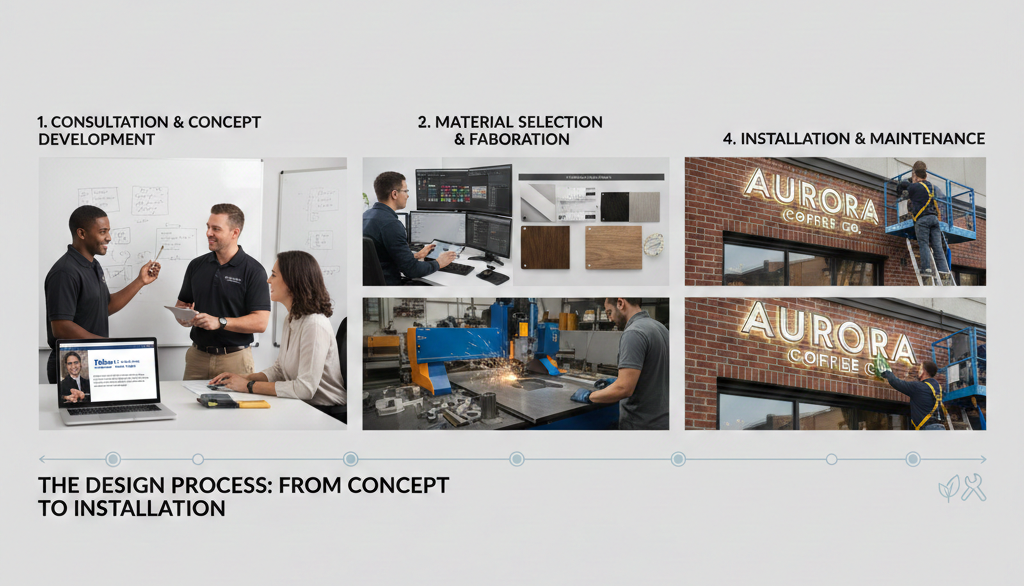
The Design Process: From Concept to Installation
Creating high-impact custom signage involves a thoughtful and collaborative process.
Consultation and Concept Development
This initial phase involves understanding your brand, objectives, target audience, and site specifics. Professional sign makers will work with you to brainstorm ideas and develop initial concepts. For further inspiration and to see how other businesses have transformed their spaces, check out this article on effective business signage: Forbes Article on Business Signage.
Design and Mock-ups
Once concepts are agreed upon, designers will create detailed mock-ups, often superimposed onto photos of your premises, allowing you to visualize the final product. This stage involves refining fonts, colors, materials, and illumination options.
Material Selection and Fabrication
Choosing the right materials is crucial for durability, aesthetics, and maintenance. Fabrication involves bringing the design to life using specialized equipment and skilled craftsmanship.
Installation and Maintenance
Professional installation ensures your sign is securely mounted and compliant with all regulations. Ongoing maintenance, such as cleaning and repairs, helps preserve its appearance and longevity.
Strategic Placement: Maximizing Visibility and Impact
Even the most beautiful sign will fail if it's not seen. Strategic placement is as important as the design itself.
Understanding Foot and Vehicle Traffic Patterns
Consider where people are coming from and how quickly they are moving. Signs for fast-moving vehicle traffic need to be larger, higher, and easier to read at a glance, while signs for pedestrians can incorporate more detail.
Permitting and Regulations in Melbourne
Melbourne councils have specific regulations regarding sign size, placement, illumination, and design. It's essential to work with a sign company that understands these requirements to avoid costly delays or fines.
Optimal Viewing Angles and Heights
Eye-Level Signage: Best for engaging pedestrians and providing detailed information.
Elevated Signage: Crucial for visibility from a distance, especially for businesses in multi-story buildings or busy commercial strips.
Trends in Custom Signage for 2026
Staying ahead of the curve means understanding emerging trends that can give your business an edge.
Sustainability in Signage
With growing environmental awareness, sustainable signage options are becoming increasingly popular.
Eco-Friendly Materials: Using recycled, recyclable, or sustainably sourced materials like bamboo, reclaimed wood, or recycled plastics.
Energy-Efficient Lighting: LED illumination is standard for its energy efficiency, longevity, and versatility. Solar-powered options are also gaining traction.
Integration of Digital Elements
While traditional static signs remain vital, integrating digital components offers dynamic possibilities.
LED Screens: High-resolution screens can display rotating promotions, videos, and real-time information, perfect for engaging passersby.
Interactive Displays: Touchscreen kiosks or QR codes on signs can provide deeper engagement, linking customers to websites, menus, or social media.
Experiential Signage
Creating signs that offer an experience, not just information. This could involve artistic installations, highly interactive elements, or signs that encourage social media sharing.
The Investment: Cost vs. Value
Custom signage is an investment, and understanding its long-term value is key.
Factors Influencing Signage Cost
Size and Complexity: Larger and more intricate designs naturally cost more.
Materials: High-end materials like stainless steel or specialized acrylics will be more expensive than standard options.
Illumination: Illuminated signs involve additional costs for electrical components and installation.
Installation Difficulty: Factors like height, access, and structural requirements can impact installation costs.
Measuring Return on Investment (ROI)
While difficult to quantify precisely, custom signage contributes to ROI through:
Increased Foot Traffic: A well-designed sign attracts more customers.
Enhanced Brand Recognition: Consistent and impactful signage builds brand awareness and recall.
Perceived Value: High-quality signage suggests a high-quality business, commanding trust and premium perception.
Maintenance and Longevity of Your Signage
Ensuring your custom signage remains high-impact over time requires proper care and maintenance.
Regular Cleaning and Inspection
Dust, pollution, and weather can degrade your sign's appearance. Regular cleaning (following manufacturer guidelines for materials) and periodic inspections for wear and tear are crucial.
Prompt Repairs and Upgrades
Addressing any damage or malfunction quickly prevents further issues and maintains your professional image. Consider periodic upgrades to keep your signage looking fresh and modern, especially if your branding evolves.
Conclusion
In the dynamic and competitive business landscape of Melbourne, high-impact custom signage is not just an expense; it's a strategic investment in your brand's future. By carefully considering design, materials, placement, and emerging trends, your business can create a powerful visual presence that attracts customers, builds brand recognition, and ensures sustained success well into 2026 and beyond. A well-crafted sign tells your story, makes a statement, and ultimately helps your business stand out from the crowd.
Ready to transform your business's visibility and leave a lasting impression? Don't let your brand get lost in the urban jungle. Invest in custom signage that truly represents your unique identity and captivates your audience.Contact us today to get a quote and start designing your high-impact custom signage.
Frequently Asked Questions
What are the main benefits of investing in custom signage for my Melbourne business?
Custom signage offers numerous benefits, including increased brand visibility and recognition, enhanced curb appeal, professional representation of your brand identity, and a continuous marketing presence that works 24/7 to attract potential customers. It helps differentiate your business in a competitive market.
How do I choose the right type of custom signage for my business?
The best type of signage depends on your business's location, target audience, brand aesthetic, and budget. Consider factors like foot traffic, vehicle traffic, desired visibility (day vs. night), and the overall message you want to convey. Consulting with a professional sign company can help you determine the most effective solutions.
What is the typical lifespan of custom outdoor signage in Melbourne's weather conditions?
The lifespan of outdoor signage varies greatly depending on the materials used, quality of fabrication, and exposure to weather elements. High-quality materials like aluminium, stainless steel, and marine-grade acrylics, combined with proper installation and maintenance, can last for 10-15 years or more.
Do I need a permit for custom signage in Melbourne?
Yes, most outdoor signage in Melbourne requires a permit from the local council. Regulations vary based on sign size, type, illumination, and location. It is crucial to work with a sign company that is knowledgeable about local permitting requirements to ensure your signage complies with all regulations.
Can custom signage be eco-friendly?
Absolutely! Many sign companies now offer sustainable options, utilizing eco-friendly materials such as recycled acrylics, sustainably sourced timber, and energy-efficient LED lighting. Discussing your preference for sustainable solutions with your sign provider is a great way to reduce your environmental footprint.
How often should I update or replace my business signage?
While well-made signage can last for many years, you should consider updating or replacing it if your branding changes, the sign shows significant wear and tear, or you want to implement new technology like digital displays. A refresh every 5-10 years can help keep your business looking modern and relevant.