Signage Materials Comparison: Best Options for Melbourne
Picking out a new sign is a lot like dressing for a high-stakes meeting. Sure, the look and the message carry weight, but the fabric of the sign itself is what really seals the deal.
A top-tier sign can keep heads turning for a decade, while a cheap, mismatched material will likely sun-bleach, snap, or look like a mess way sooner than you’d ever want. That is why a detailed Signage Materials Comparison matters for businesses across Melbourne.
From busy retail strips and corporate offices to hospitality venues and industrial sites, signage plays a major role in creating visibility and building trust. Melbourne’s changing weather conditions also make material selection more important than many business owners realise.
This guide explores the most popular options available today, compares durability, appearance, cost, and performance, and helps simplify the process of selecting the right signage solution for different business needs and environments.
Why a Signage Materials Comparison Matters for Melbourne Businesses
A well-planned Signage Materials Comparison helps businesses avoid costly mistakes and achieve stronger long-term results. Signage is often one of the first things customers notice. A professional-looking sign can communicate quality before a single conversation takes place.
Melbourne’s weather is a brutal testing ground. Your branding has to survive blistering summer heatwaves, lashing rain, and those famous icy gusts all in the same week. A material that looks pristine in a lobby might fall apart on a street corner, which is why paying a bit more upfront for heavy-duty stuff usually pays for itself in the long run.
Running a proper signage materials comparison means looking way past the surface. You’ve got to weigh up the aesthetic vibe against things like cleaning needs, how many years it’ll last, and how tricky it is to bolt to the wall. The sweet spot is a material that looks incredible while actually doing its job without constant babysitting.
Loads of local owners hunting for a signage material guide melbourne fall into the trap of only looking at the price tag. The reality is that grit and durability are where the real profit lives. Buying the right gear on day one stops you from bleeding cash on repairs later and keeps your reputation looking sharp and professional.
Understanding the Most Popular Commercial Signage Materials
Before you pull the trigger, you really need to get a handle on what these different options actually bring to the table. Every substrate has its own secret weapon, depending on whether it’s sitting in a boardroom or facing the ocean.
A truly useful signage materials comparison needs to look at how these things survive in the real world, under the sun and in the wind, rather than just how they look under a showroom spotlight.
When owners dig into the best signage materials for businesses, they quickly realize there isn’t a "one size fits all" magic bullet. The smartest brands out there mix and match, using different textures and strengths to hit their marks across every storefront and office they own.
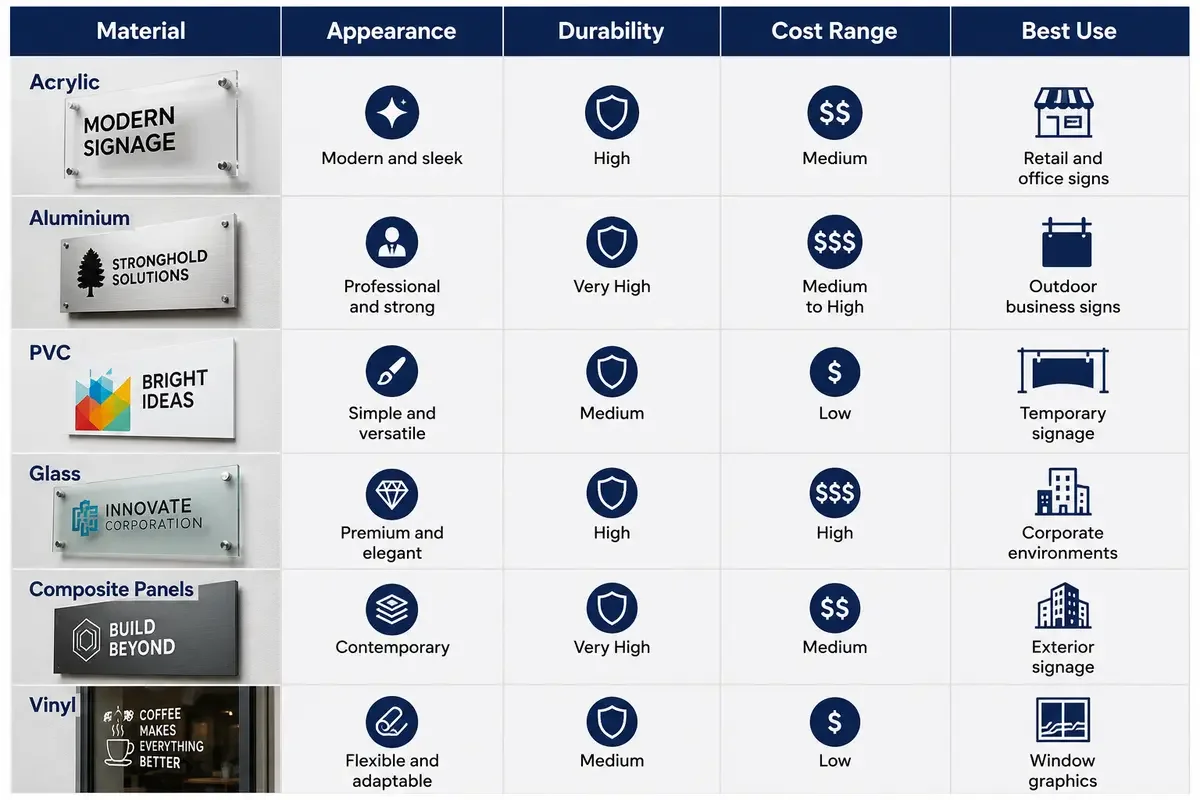
Acrylic Signage: Modern Style with Strong Performance
Acrylic is a perennial heavyweight in any signage materials comparison because it’s just so slick and can be molded into almost anything you can imagine.
It gives you that high-end glass look but without the massive weight or the risk of it shattering if someone bumps it. You’ll see it everywhere, from swanky reception desks and fashion boutiques to big shopping malls and medical suites.
Because the surface is so crisp, your branding and logos come out looking incredibly sharp and punchy. It’s a dream for backlit displays that need to pop after the sun goes down. Most owners comparing acrylic vs aluminium signage find that acrylic wins on the "modern" feel for inside the office, even though it’s plenty tough for sheltered spots.
For a deeper dive into the technical perks and how long this stuff actually lasts in the local climate, you can check out the breakdown of acrylic signage benefits and material durability over at Attic Signs.
A big win often spotted in a signage materials comparison is how acrylic manages to look like a million bucks without actually costing it. It’s the perfect bridge for brands that want a premium identity without blowing a hole in their quarterly budget.
Aluminium Signage: Built for Melbourne Conditions
If you’re looking for something that’s basically bulletproof, aluminium is almost always the winner in a signage materials comparison.
It’s naturally immune to rust, rot, and the sun’s UV rays, which makes it the king of handling Melbourne’s bipolar weather. These signs can sit out in the elements for years and still look like they were installed yesterday with nothing more than a quick wipe down.
That clean, metallic look is a perfect fit for law firms, factories, schools, and big-box retail. If you want to get fancy, powder-coating gives you extra armor while letting you match your exact brand colors perfectly. According to the Australian Government, maintaining a strong business presence helps improve brand recognition and customer engagement in competitive markets.
When you do a deep signage materials comparison, aluminium usually wins on "value for money" because it just doesn't quit. For locals vetting commercial signage materials Melbourne, this stuff is almost always at the top of the list for anything that’s going to be stuck outside.
Composite Panels and PVC: Practical Solutions for Many Applications
Things like Alucobond and PVC are the go-to workhorses when you need a mix of toughness and a friendly price point.
Composite panels sandwich a light core between thin metal sheets, giving you a board that’s rigid but easy to hang. It’s the standard for huge shopfront facias and outdoor warehouse branding where you need it to stay flat and face the wind.
PVC is your best friend for internal stuff or one-off events like trade shows and sales. It won’t live as long as metal or thick acrylic, but if you’re watching every cent, it gets the job done without looking cheap.
A fair signage materials comparison has to admit that sometimes "cheap and cheerful" is actually the right move, especially for a six-week promo or a seasonal pop-up. The sheer volume of people asking for a custom sign material comparison shows how much local businesses are trying to stand out in the Melbourne hustle.
Glass Signage: Premium Branding for Modern Spaces
Glass just screams "top-tier." For any brand that wants to signal they are at the top of its game, glass holds a very specific, high-status spot in a signage materials comparison.
You’ll find it mostly in high-end legal offices, posh retail boutiques, and surgical suites. That clear, polished edge gives off a refined, expensive vibe that’s hard to beat. Yes, it costs more to get it mounted safely, but the "wow factor" usually makes that investment worth it. Throwing on some frosting or 3D lettering can take the whole look to another level.
If you’re chasing that "high-end" look, you can check out the latest in premium glass signage solutions for modern businesses to see what’s trending. A solid signage materials comparison balances the "pretty" with the "practical," and glass is the undisputed champ for indoor spots where you need to impress.
Outdoor Signage Materials Comparison for Melbourne Weather
Weather exposure is one of the most important considerations when selecting signage materials.
A no-nonsense outdoor signage materials comparison makes it pretty obvious why metal and composites own the streets; they just don't die.
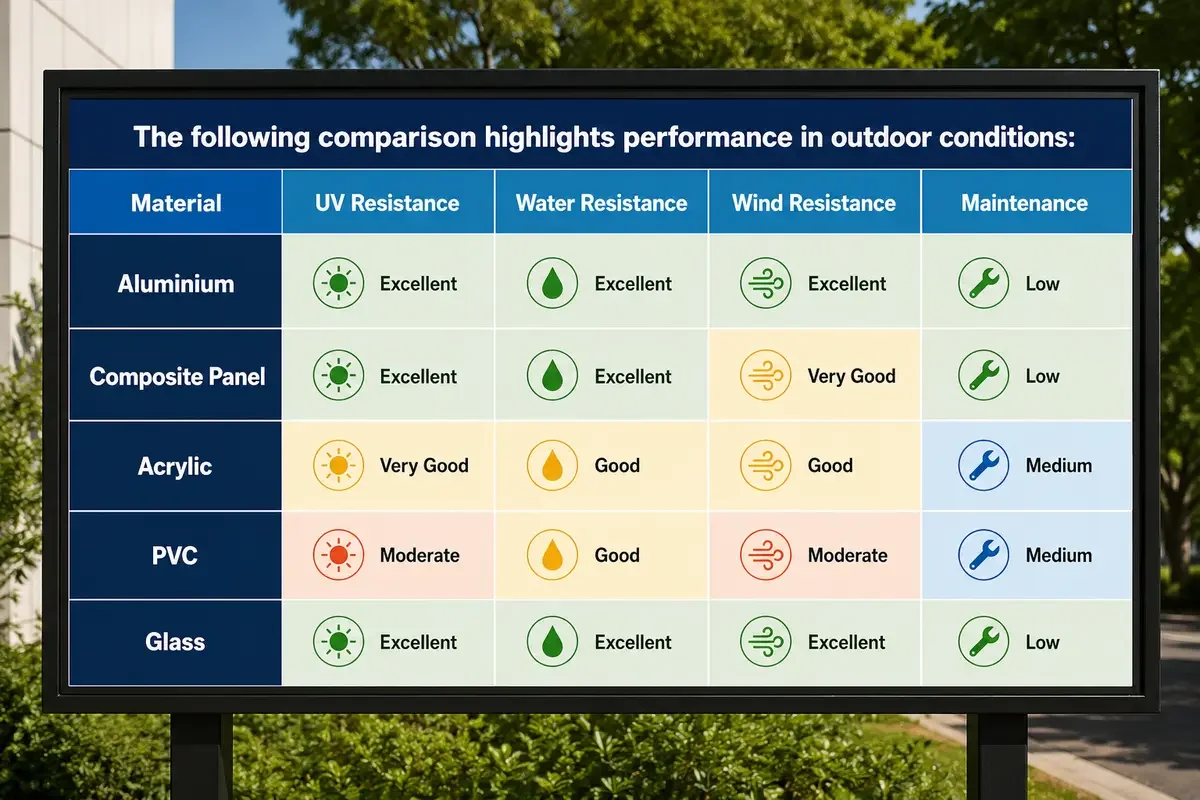
Owners looking for weather-resistant signage materials Melbourne are usually hunting for stuff that won’t turn pink in the sun or rust in the rain. Picking stuff built for our four-seasons-in-a-day climate is the only way to get a decent return on your spend.
A signage materials comparison that actually works has to be grounded in the local environment, not just how nice the glossy finish looks on a computer screen.
Indoor Signage Material Options for Professional Spaces
Inside, the rules change. It’s less about surviving a storm and more about the "feel" of the space and how customers interact with your brand. The main indoor signage material options usually involve acrylic, glass, and vinyl. These give you a ton of creative room to play with the latest interior design styles.
Entry signs usually lean on glass or acrylic for that "polished" welcome, while wayfinding signs, the stuff that tells you where the toilets are, usually stick to PVC or vinyl to save cash. Retailers love to mix them all together to create a textured, 3D look.
A smart signage materials comparison shows that when you’re inside, you can prioritize style over substance. You’re trying to build a memory for the customer, keeping the branding tight while making sure they can actually find what they’re looking for.
Business Sign Material Selection: Finding the Right Fit
Don’t just buy what everyone else is buying. Your spot, your budget, and your specific goals are unique to you.
A strategic business sign material selection process typically considers:
Brand image and customer perception
Indoor versus outdoor placement
Available budget
Desired lifespan
Maintenance expectations
Environmental exposure
For most of us, the win is in the mix, using metal for the tough stuff outside and acrylic for the fancy stuff inside. If you’re hunting for commercial signage materials for melbourne businesses, there’s plenty of local inspo at Attic Signs to see how it’s done.
A thorough signage materials comparison makes sure that your choice doesn’t just look pretty but actually holds up its end of the bargain.
Cost vs Value: Looking Beyond Initial Pricing
The biggest blunder? Only looking at the quote for today. A "cheap" sign that needs to be binned in 12 months is actually way more expensive than a premium one that lasts five years. Once you add up the labor to replace it, the "budget" option often bites you in the backside.
A signage materials comparison that actually tells the truth looks at the "total cost of ownership", what it’s going to cost you over three or four years, not just on the day you pay the invoice.
Look at it this way: aluminium costs more than PVC on day one, but since it stays perfect for a decade, it’s the better buy. Savvy owners chasing durable signage materials melbourne realize that spending an extra few hundred bucks now saves them thousands in the long run.
Conclusion
A signage materials comparison that gets results looks way deeper than just the "look." The material you pick determines if you’ll be cleaning it every week, if it’ll still be there after a storm, and if it’ll still be worth something in five years.
Acrylic is your "modern" choice, aluminium is the "tank," composite is the "all-rounder," PVC is the "budget" play, and glass is the "prestige" move.
You’ll get the best results when you pick your materials based on where the sun hits and how long you need the sign to hang. A little bit of planning upfront makes sure people see you, trust you, and your money isn’t wasted.
Getting some expert advice can take the headache out of the whole thing. Give us a yell to chat about what actually works for your specific location, or request a free signage quote in Melbourne to see what a proper, Melbourne-tough sign looks like.
Frequently Asked Questions
What is the best material for outdoor business signs in Melbourne?
In any honest signage materials comparison, metal and composite panels usually win for the outdoors because they don’t care about the sun, the rain, or the wind; they’re just built for the long haul.
How does acrylic compare to aluminium signage?
When you do the acrylic vs aluminium signage dance, acrylic is usually the winner for that "wow" factor inside, while aluminium is the undisputed champ for surviving the Melbourne elements.
Which signage materials require the least maintenance?
A signage materials comparison usually puts metal and glass at the top for "set and forget." They don't fade or rust, so you aren't stuck on a ladder every weekend trying to fix them.
Why is a signage materials comparison important before ordering signs?
Using a signage materials comparison is basically just doing your homework. It helps you find that perfect middle ground between looking good and lasting long, so you don't end up paying for the same sign twice.