Beyond the Neon: 2026’s Top Material Trends in Melbourne Bespoke Sign Design
Melbourne’s streets aren’t exactly quiet. They’re alive with color, grit, and sharp detail. Moving into 2026, bespoke sign design is shifting away from loud neon and toward layered materials that feel authentic, raw, and built to have an impact that lasts.
Across Fitzroy studios and Collins Street storefronts, commercial signage trends in Melbourne lean toward timber grains, brushed metals, and stone textures. The shift toward modern sign materials and refined finishes signals a deeper focus on quality, sustainability, and subtle power in premium business signage.
This new wave of bespoke sign design blends innovative sign fabrication with tactile surfaces that reflect unique branding displays across retail, hospitality, and commercial spaces. As personalized sign creation gains ground, Melbourne businesses favor material depth over glare, choosing premium business signage that feels crafted rather than manufactured.
The shift from glow to grounded materials
Neon once hid flaws with its glare, but that safety net is gone. Clients now prioritize texture and depth, from raw steel on concrete to routed timber. This shift toward bespoke sign design has forced a more disciplined approach to material sourcing and installation sequencing.
A hospitality client in Fitzroy once insisted on polished brass letters for an external facade. It looked brilliant on installation day. Six months later, oxidation turned it patchy. They hadn’t budgeted for ongoing polishing. This experience influenced the early discussion of material longevity in bespoke sign design. No glossy brochure explains that trade-off clearly enough.
The move away from glow-heavy signage toward grounded finishes has also slowed production timelines. Brushed metals and layered composites require more fabrication stages. Cutting corners becomes obvious under daylight. That pressure has raised standards in workshops across the city, but it has also exposed underpriced quotes that ignore finishing labor.
What clients misunderstand about material cost
Clients often mistake material price for total cost. While acrylic is affordable, the labor for lamination and polishing can double the estimate. Conversely, bespoke sign design using steel may cost more upfront but saves on finishing and maintenance over time.
One corporate office project requested stone-clad signage in the lobby. The stone itself wasn’t the issue. Structural reinforcement in the plasterboard wall was. Engineering adjustments added weeks and a high cost to the bespoke sign design. The conversation shifted from visual impact to compliance paperwork almost overnight.
Budget compression creates odd compromises. Cheaper fixings paired with premium faces. Lightweight substrates were used where density was needed. Those shortcuts rarely age well. Experienced teams try to intervene before cost-driven decisions damage long-term durability, but sometimes procurement departments focus solely on immediate savings.
Bespoke sign design under real site pressure
Bespoke sign design usually unfolds in uncontrolled environments. Sites are dusty. Access times are restricted. Electricians arrive late. Plaster finishes aren’t cured properly. These details never appear in design presentations, yet they dictate final quality.
A Southbank retail job meant working overnight to avoid crowds. The lighting hit a snag when the wiring wasn't where the plans said it would be. We fixed it on-site. That kind of pivot comes from real experience, not just looking at CAD files.
This is where Bespoke sign design separates polished portfolios from practical operators. Fabricators who’ve wrestled with uneven brick, shifting studs, and council inspectors understand how minor miscalculations compound quickly. The best designs survive real-world friction rather than collapse under it.
Fabrication bottlenecks and workshop realities
Production schedules look neat on Gantt charts. Workshops tell another story. CNC routers go down. Powder coaters delay batches. Freight shipments arrive scratched. Every fabrication stage of bespoke sign design contains a variable that can quietly derail deadlines.
In one Docklands commercial fit-out, custom aluminum letters were delayed due to a supplier backlog. Temporary vinyl signage went up instead. The client wasn’t happy, but the alternative was leaving a blank facade for three weeks. Material availability isn’t always visible during early quoting.
These bottlenecks shape how Bespoke sign design projects are priced and sequenced. Experienced teams build buffers. Newer operators promise aggressive timelines and hope for smooth runs. Melbourne's supply chain inconsistencies often defeat hope.
Material durability in Melbourne's climate
Coastal air creeps inland further than many assume. Salt exposure affects fasteners and finishes, even in suburbs not immediately near the bay. Stainless steel grades matter, and within a bespoke sign design, powder coating quality matters more than clients realize during initial discussions.
A St Kilda venue opted for mild steel to save budget. Within two winters, rust stains began bleeding down the facade. Rectification costs exceeded the initial savings. That lesson tends to stick, particularly when navigating the specifics of Victorian planning permits for signage. Material selection must consider climate, not just appearance.
UV rays cause colors to drift over time. Those crisp acrylic faces can end up yellowing if you use cheap sheets. Fabricators who actually know these risks tend to be cautious in meetings, even if a client just wants to hear a bold promise.
Custom signage Melbourne supply chain stress
Custom signage Melbourne businesses operate inside a tight network of local suppliers. Sheet metal distributors, timber yards, LED importers, and finishers. When one link slows, ripple effects follow. Clients rarely see that dependency chain.
During pandemic years, acrylic shortages pushed lead times beyond eight weeks. Many projects pivoted toward composite aluminum panels instead. Some of those substitutions delivered better durability, yet the change came from necessity rather than creative preference.
The local supply ecosystem has improved, but fragility remains. Relying on imported specialty finishes introduces risk. Freight delays, customs holds, and damaged shipments all sit outside the control of fabricators, yet deadlines remain fixed in contracts.
Installation logistics and council approvals
Signage doesn’t exist in isolation. Councils regulate size, projection, illumination, and heritage overlays. Approval timelines can exceed fabrication time. Ignoring that reality at the quoting stage leads to uncomfortable conversations later.
A Brunswick shopfront project stalled for three months, awaiting council approval for projecting signage. The design was compliant, but paperwork lagged. Cash flow tightened. Fabricated components sat in storage. Clients often underestimate this administrative layer.
Bespoke sign design requires patience through the approval stages. Rushing into the build before permits arrive is risky. Even if a client demands a fast installation, professional operators will not compromise on quality.
Premium business signage and budget tension
Premium business signage sounds straightforward until procurement teams begin negotiating. High-end finishes cost more. Installation precision costs more. Warranty coverage costs more. Cutting any of those erodes perceived quality over time.
One luxury retailer insisted on seamless joinery for illuminated wall panels. Achieving that required concealed access panels and custom wiring channels. The quote reflected that complexity. Finance pushed back. After revision, visible seams reappeared in the final product.
There’s constant tension between aspiration and allocation. Skilled fabricators explain the consequences of budget trimming, but not every client wants that detail. Overpromising within restricted budgets remains one of the fastest ways to damage reputation in this field.
Innovative sign fabrication in practice
Innovative sign fabrication isn’t about flashy machines alone. It’s about sequencing processes to reduce waste and error. CNC precision matters, but so does manual finishing. Automated cuts still require human judgment during assembly.
A recent office fit-out integrated recessed LED channels into layered acrylic panels. Tolerances had to be exact to avoid light bleed. One millimeter off, and the glow became uneven. That margin for error separates concept from execution.
Technology helps, yet overreliance can mislead inexperienced teams. Machines produce parts. Craftspeople ensure cohesion. The balance between digital precision and physical adjustment defines consistent results in modern workshops.
Personalised sign creation client pitfalls
Personalized sign creation often begins with Pinterest boards and ends with pragmatic revisions. Clients arrive with inspiration pulled from overseas hospitality spaces. Local conditions rarely match those examples.
One rooftop bar insisted on using untreated timber letters for their outdoor signage. While the look was great on paper, Melbourne’s climate is rarely kind to mood boards. After I explained the reality of warping and splitting, we added protective coatings reluctantly at first, but for the sake of the sign's long-term life.
Managing expectations without killing the excitement is a tough balance. Early honesty prevents later letdowns. In any long-term partnership, being clear is always better than just being nice.
Lighting Evolves: Halo Glow Over Harsh Neon
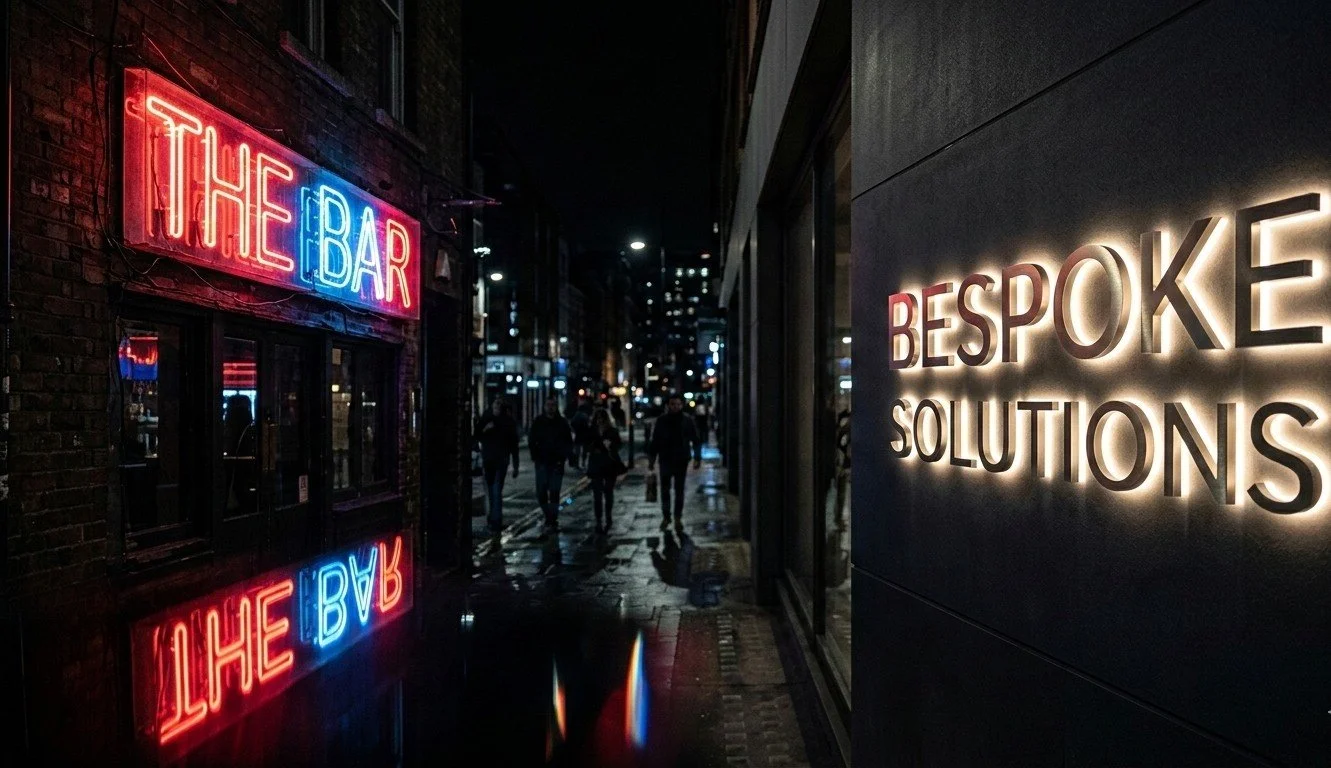
Instead of loud, exposed tubes, modern Bespoke sign designs now favor:
Halo backlighting
Warm white LEDs
Energy-efficient strips
Diffused glow
This softer lighting style feels intentional and refined.
Modern sign materials versus lifecycle costs
Modern sign materials evolve quickly. Composite panels offer lightweight strength. Engineered polymers resist UV better than older plastics. Powder coatings last longer with proper application. Yet lifecycle cost analysis often gets overlooked.
A start-up once opted for cheaper vinyl wraps instead of fabricated letters to conserve capital. Within two years, peeling edges demanded replacement. The cumulative spend exceeded the cost of a more robust initial solution.
Material choice affects not just appearance but total ownership cost. Bespoke sign design decisions ripple across years, not just installation week.
Field lessons from twenty installations
Patterns emerge over repeated installations. Brick surfaces are rarely flat. Electrical conduits rarely align with plans. Timelines rarely stay untouched. Adaptability becomes more valuable than rigid adherence to drawings.
One suburban medical center insisted on flush-mounted letters across a rendered wall. Hidden expansion joints caused slight movement. Microcracks appeared around fixings. Rectification required re-engineering mount points.
Experience tempers optimism. Every site carries unknowns. Teams that acknowledge that uncertainty upfront deliver steadier outcomes than those promising flawless execution without contingency.
Material Comparison Overview
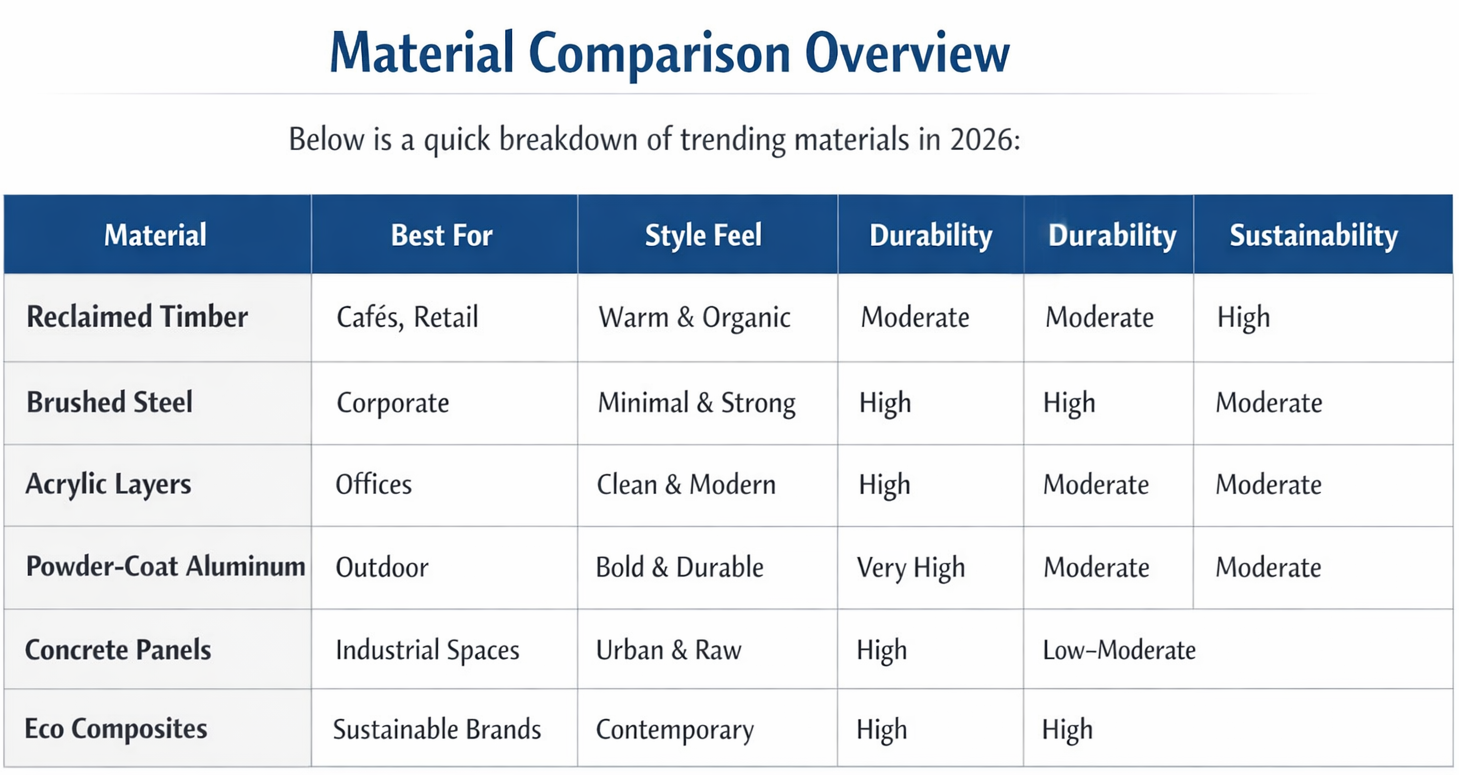
Each material tells a different story. The key is alignment between brand and surface.
Long-term maintenance and brand value
Brands evolve. Tenants change. Buildings get repainted. Signage must either adapt or be replaced. Maintenance planning rarely receives adequate attention during initial design stages.
An office tower upgraded its facade color scheme two years after signage installation. The original letter finished clashing. Replacement became inevitable. Strategic material neutrality might have an extended lifespan.
Longevity builds brand equity quietly. Bespoke sign design that accounts for potential change, avoids unnecessary replacement cycles, and protects investment over time.
Conclusion
Neon still works, but 2026 is about texture, craftsmanship, and smart builds. Bespoke sign design in Melbourne currently emphasizes material depth and soft lighting to reflect a brand’s core values with real confidence.
Brands ready to upgrade with custom signage Melbourne solutions can act now. Explore modern sign materials and innovative sign fabrication. Contact us today and bring bold, premium business signage to life.
Frequently Asked Questions
1. What makes bespoke sign design different from standard signage?
Bespoke sign design centers on custom finishes and techniques built around a brand’s specific soul. It moves past basic templates, using modern sign materials and layered details to build unique branding displays that match Melbourne’s architecture and standards.
2. Which materials are trending in custom signage Melbourne for 2026?
Melbourne’s current design vibe leans on brushed metals, old timber, and raw concrete, often mixed with glass or acrylic. These modern sign materials aren't just for show; they offer the grit and high-end finish premium business signage needs to pop in a busy retail or corporate space.
3. Is sustainable material important in bespoke sign design?
Sustainability and low-energy lighting have moved to the core of bespoke sign design. Many local firms now opt for eco-friendly modern sign materials to meet compliance and show environmental leadership all without sacrificing the sign’s visual impact.
4. How long does premium business signage last?
Premium business signage made from metal, glass, or timber can actually last for years with the right care. Innovative sign fabrication is what secures that durability, making sure every piece stands up to the wild, unpredictable shifts in Melbourne’s local weather.
5. What is innovative sign fabrication?
Innovative sign fabrication moves past the basics, using CNC routing, laser engraving, and LED systems to really push the boundaries of bespoke sign design. This tech-driven approach allows for personalized sign creation that isn't just more precise it delivers a finish that is significantly sharper and cleaner than traditional methods.
6. Why invest in unique branding displays instead of basic signage?
Unique branding displays do more than look good; they shape brand perception and offer long-term marketing value. By combining bespoke sign design with modern sign materials, businesses can build trust and carve out a solid identity in Melbourne’s fast-paced commercial market.